Showing posts with label Family Counseling. Show all posts

Sunday, 11 December 2011

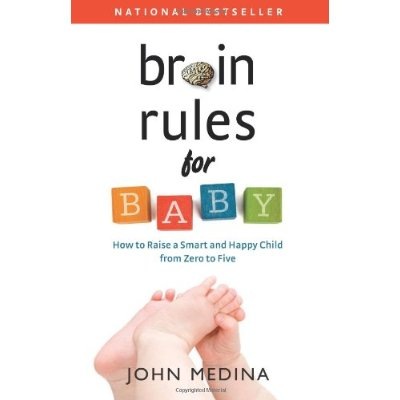
Brain Rules for Baby: How to Raise a Smart and Happy Child from Zero to Five

Brain Rules for Baby: How to Raise a Smart and Happy Child from Zero to Five
Order "Brain Rules for Baby by John Medina" Here

Book Description
What’s the single most important thing you can do during pregnancy? What does watching TV do to a child’s brain? What’s the best way to handle temper tantrums? Scientists know.

In his New York Times bestseller Brain Rules, Dr. John Medina showed us how our brains really work and why we ought to redesign our workplaces and schools. Now, in Brain Rules for Baby, he shares what the latest science says about how to raise smart and happy children from zero to five. This book is destined to revolutionize parenting. Just one of the surprises: The best way to get your children into the college of their choice? Teach them impulse control.

Brain Rules for Baby bridges the gap between what scientists know and what parents practice. Through fascinating and funny stories, Medina, a developmental molecular biologist and dad, unravels how a child’s brain develops and what you can do to optimize it.

About the Author
John Medina is a developmental molecular biologist and research consultant. He is the author of the long-running New York Times bestseller, Brain Rules: 12 Principles for Surviving and Thriving at Work, Home, and School. He is an affiliate Professor of Bioengineering at the University of Washington School of Medicine. He is also the director of the Brain Center for Applied Learning Research at Seattle Pacific University. Medina lives in Seattle, WA, with his wife and two boys.

Sunday, 16 October 2011

What's Wrong with My Kid?

What's Wrong with My Kid?: When Drugs or Alcohol Might Be a Problem and What To Do about It
Order "What's Wrong with My Kid? by George E. Leary Jr." Here

Book Description
Raising a teenager is tough, but when you suspect that your kid is abusing substances, and is possibly addicted, it can feel unmanageable—and it can be hard to know where to find sound advice. You are not alone.

Author George E. Leary Jr., M.A., was a longtime youth social worker when his eldest son became an addict. Through this heart wrenching experience, he changed his life’s path and committed to working with teens with substance abuse problems. In this straightforward and compassionate guide, he applies his personal experience and expertise to explain

  • the warning signs of alcohol or drug addiction;
  • how to intervene and find treatment for both the teen and the family;
  • the nature and biology of addiction, and its cause and effect on developing brains and bodies;
  • the co-occurring mental health issues common to teenagers;
  • the role of family in enabling behavior;
  • the types of treatment, including the Twelve Step model; and
  • the role of drugs and alcohol in increasing teen suicide rates.

What’s Wrong with My Kid? reveals that you aren’t alone and that steps can be taken to put your family back together.

About the Author
George E. Leary Jr., M.A., provides mental health services to addicts and those living with HIV/AIDS. He established and operated two recovery houses in Baltimore, Maryland, and served for nine years on a mobile crisis intervention team.

Wednesday, 7 September 2011

Dr. Riley's Box of Tricks

Uncommon Solutions for Everyday Parenting Problems
Order "Dr. Riley's Box of Tricks by Douglas A. Riley EdD" Here

Book Description
Every parent sends their child to his or her room as a punishment at one time or another. But, have you ever considered grounding your children from their rooms? Dr. Douglas Riley has. In fact, if your daughter isn't allowed to use her own room after you have declared it "unfit for human habitation" until she straightens it, you'll be amazed how clean she will keep her space next time.

Dr. Riley has prescriptions for every situation, from messy rooms to homework procrastination, from sibling combat to cell-phone abuse. Ideal for any exasperated parent, this must-have guide offers dozens of creative solutions for the most persistent parenting problems. These gentle yet proven techniques turn the tables to put you back in charge--and get your kids to laugh in the process.

About the Author
Douglas Riley, EdD, is a licensed clinical psychologist with more than thirty years of experience working with children, adolescents, and parents. He lives in Virginia.

Wednesday, 31 August 2011

How Parental Pressure & Material Advantage Are Creating a Generation of Disconnected & Unhappy Kids

The Price of Privilege
Order "The Price of Privilege by Madeline Levine" Here

Book Description
In recent years, numerous studies have shown that bright, charming, seemingly confident and socially skilled teenagers from affluent, loving families are experiencing epidemic rates of depression, substance abuse, and anxiety disorders—rates higher than in any other socioeconomic group of American adolescents. Materialism, pressure to achieve, perfectionism, and disconnection are combining to create a perfect storm that is devastating children of privilege and their parents alike.

In this eye-opening, provocative, and essential book, clinical psychologist Madeline Levine explodes one child-rearing myth after another. With empathy and candor, she identifies toxic cultural influences and well-intentioned, but misguided, parenting practices that are detrimental to a child's healthy self-development. Her thoughtful, practical advice provides solutions that will enable parents to help their emotionally troubled "star" child cultivate an authentic sense of self.

About the Author
Madeline Levine, Ph.D., has been a practicing clinical psychologist in Marin County for the past twenty-five years. She is the author of Viewing Violence and See No Evil: A Guide to Protecting Our Children from Media Violence. A frequent lecturer on child and adolescent issues, she lives in California with her husband and three sons.

Saturday, 27 August 2011

The 1-2-3 Magic Workbook for Christian Parents

Effective Discipline for Children 2-12
Order "Magic Workbook for Christian Parents by Thomas W. Phelan PhD, Chris Webb MS MA" Here

Book Description
This companion workbook to 1-2-3 Magic for Christian Parents takes parents carefully through the program to immediately manage troublesome behavior with reason, patience, and Christian compassion. This successful, straightforward program has guided parents through the difficult task of raising competent and happy children for more than 20 years and shows mothers and fathers how to achieve three crucial parenting objectives—controlling obnoxious behavior, encouraging good behavior, and strengthening the parent-child relationship. Special exercises and biblical references highlight the Christian point of view, and each workbook chapter contains a summary, questions about the content, case studies, troubleshooting exercises, and wrap-up bullets. In addition to providing material for parents, this guide includes curricula and activities for group leaders, teachers, and pastors as well as tactics for addressing the challenges that commonly arise when trainers teach the method in group environments. Extensive reference and resource sections also suggest further research and follow-up study.

About the Author
Thomas W. Phelan, PhD, is a member of the Illinois and American Psychological Associations and the author of 1-2-3 Magic, All About Attention Deficit Disorder, and Surviving Your Adolescents. He lives in Glen Ellyn, Illinois. Chris Webb, MS, MA, is a national certified counselor and an associate pastor at First Baptist Church in Jackson, Mississippi.

Thursday, 25 August 2011

Adolescents, Families, and Social Development: How Teens Construct Their Worlds

Adolescents, Families, and Social Development: How Teens Construct Their Worlds
Order "Adolescents, Families, and Social Development: How Teens Construct Their Worlds by Judith G. Smetana" Here

Book Description
Adolescence is an important developmental period that poses significant challenges for both teens and parents. Although adolescents may become significant sources of irritation and frustration to parents, it is clear now that notions of adolescence as a time of storm and stress are overstated. In this book, Smetana proposes that adolescents' conflicts and disagreements with parents and their attempts to keep secrets and manage personal information are all reflections of adolescents' developing autonomy.

Using examples from extensive interviews with adolescents and parents, Smetana illustrates how adolescents and parents in different contexts actively negotiate autonomy and coordinate concerns with autonomy and personal choice with their developing understanding of society and social conventions, safety and health, and moral concerns with justice, welfare, and rights. Smetana draws on social domain theory to consider adolescent–parent relationships, parenting beliefs, and parenting practices among families of different cultures and ethnicities. Drawing on the author's 25 years of research, as well as popular sources and scholarly research drawn from anthropology, history, sociology, and psychology, this book provides an in-depth examination of adolescent social development in the context of the family.

About the Author
Judith G. Smetana is Professor of Psychology and Director of the Ph.D. Program in Developmental Psychology at the University of Rochester, where she also held the Frederika Warner Chair in Human Development from 1995 to 1998. She has served on the editorial boards of numerous journals, and she is the author of more than 150 articles and chapters on the development of children's moral and social reasoning and on adolescent–parent relationships in different ethnic and cultural contexts.

1-2-3 Magic: Effective Discipline for Children 2-12

1-2-3 Magic: Effective Discipline for Children 2-12
Order "1-2-3 Magic: Effective Discipline for Children 2-12 by Thomas W. Phelan PhD" Here

Book Description
This revised edition of the award-winning 1-2-3 Magic program addresses the difficult task of child discipline with humor, keen insight, and proven experience. The technique offers a foolproof method of disciplining children ages two through 12 without arguing, yelling, or spanking.

By means of three easy-to-follow steps, parents learn to manage troublesome behavior, encourage good behavior, and strengthen the parent-child relationship, avoiding the "Talk-Persuade-Argue-Yell-Hit" syndrome which frustrates so many parents. Ten strategies for building a child’s self-esteem and the six types of testing and manipulation a parent can expect from the child are discussed, as well as tips on how to prevent homework arguments, make mealtimes more enjoyable, conduct effective family meetings, and encourage children to start doing their household chores. New advice about kids and technology and new illustrations bring this essential parenting companion completely up-to-date.

About the Author
Thomas W. Phelan, PhD, is a clinical psychologist and a nationally renowned expert on child discipline and attention deficit disorder. His books include 1-2-3 Magic for Teachers, All About Attention Deficit Disorder, and Surviving Your Adolescents. He lives in Glen Ellyn, Illinois.

Wednesday, 24 August 2011

Child Discipline Techniques

Discipline_child

Overview

Disciplining a child is the least favorite part of parenthood for many parents. When your child is born, it is hard to imagine your sweet baby would ever do anything wrong. As she grows up, there will be times when you must correct her behavior. According to the American Academy of Pediatrics, a loving parent includes three elements when disciplining a child: a way to learn from mistakes, a plan for teaching correct behavior and a strategy for handling undesirable behavior. Put together a discipline plan that works for you and your child.

Step 1

Use positive reinforcement techniques when disciplining your child. Instead of reacting strongly to bad behavior from your child, enforce the good behaviors he exhibits. A publication from James Madison University explains that you should reinforce your child's good efforts verbally and nonverbally. When you child asks for something politely, thank him for asking nicely or just give him a big smile so he knows you are pleased.

Step 2

Utilize the effective discipline technique of timeout, which work well for younger school-age children and toddlers. The KidsHealth website says to tell your child that her behavior is not OK and put her in the timeout chair. Sit very young children in timeout for just one minute. As you child grows older, set a timer. If she is 6 years old, set the timer for six minutes. After releasing your child from the timeout chair, sit down with her and discuss why you put her in timeout and how to fix the behavior next time. Give lots of hugs and positive affirmation.

Step 3

Distract your young child from potentially dangerous situations and undesirable behaviors. If your child is trying to play with the electrical outlets, do not yell at him. Instead, turn him away from the outlet and show him an appropriate toy. Engage him until he forgets about the outlet. Take him to another room if he continues to show interest in the outlet. Use this technique for other behaviors, such as snatching toys from other children or running in the house.

Step 4

Give your child choices. As your child grows older, she may argue over what color shirt to wear, what book to read or what cereal to have for breakfast. Follow the choice principle technique recommended by Old Dominion University. This technique gives your child a voice in choosing between two acceptable outcomes. If you are at home and she wants to go through every item of clothing in her closet before getting dressed every morning, do not get frustrated. Hold up two acceptable choices and tell her, "You may wear the red or blue shirt." This technique eliminates conflict and makes the situation resolve more smoothly.

Tips and Warnings

  • Engage your child when you discipline them by talking to them about the problem. Never speak negatively about your child in front of other people. Use good behavior charts to encourage your child to make the right choices. Be clear about your expectations of your child's behavior. Outline the consequences of poor behavior to your children.
  • Check with your pediatrician if you have concerns about your child's behavior. Never hit your child.

Friday, 5 August 2011

The Revolutionary Program That Gets Your Kids To Listen Without Nagging, Reminding, or Yelling

If I Have to Tell You One More Time
Order "If I Have to Tell You One More Time by Amy McCready" Here

Book Description
Why is it so difficult sometimes to get kids to listen? You ask your child to turn off the TV, do her homework, or get ready for school or bedtime. You know he heard you, but he ignores you. You ask again and still...no response. You've tried everything-time-outs, nagging, counting to three-and nothing seems to work.

In If I Have to Tell You One More Time..., founder of the popular online parenting course Positive Parenting Solutions Amy McCready presents a nag- and scream-free program for compassionately, yet effectively, correcting your children's bad behavior.

In this invaluable book, McCready shows parents how an understanding of the psychological theory espoused by Alfred Adler (1870-1937) can put an end to power struggles in their households. Adlerian psychology focuses on the central idea that every human being has a basic need to feel powerful-with children being no exception to the rule. And when this need isn't met in positive ways, kids will resort to negative methods, which often result in some of the most frustrating behavior they exhibit. If I Have to Tell You One More Time... provides the knowledge and tools parents need to address the deeper issues that inspire their children to misbehave. Read this book and rediscover the joy of parenting!

About the Author
Amy McCready is the founder of the popular online parenting course Positive Parenting Solutions. A sought-after parenting expert, Amy has appeared on NBC's Today, Rachael Ray, MSNBC's Dr. Nancy, and elsewhere. A regular parenting contributor for the "Mom Blogs," Amy lives in Raleigh, North Carolina, with her husband and two sons.

Thursday, 4 August 2011

Setting Limits with Your Strong-Willed Child

Eliminating Conflict by Establishing Clear, Firm, and Respectful Boundaries
Order "Setting Limits with Your Strong-Willed Child by Robert J. MacKenzie Ed.D." Here

Book Description
Now You Can Effectively Parent Your Strong-Willed Child Does your child constantly misbehave and ignore or refuse your requests for proper behavior? Is your relationship with your child based on conflict instead of mutual respect and cooperation? With the help of this groundbreaking book, you can create a positive, respectful, and rewarding relationship with your child.

Inside are proven techniques and procedures that provide a refreshing alternative to the ineffective extremes of punishment and permissiveness. Parents and teachers alike will discover how to effectively motivate the strong-willed child and achieve proper conduct. You will learn how to:

  • Understand and empathize without giving in
  • Hold your ground without threatening
  • Remove daily power struggles between you and your child
  • Give clear, firm messages that your child understands and respects
  • And much more!

About the Author
Robert J. MacKenzie, Ed.D., is an educational psychologist and family therapist who founded the Setting Limits Program. He is the author of Setting Limits and Setting Limits in the Classroom.

Friday, 22 July 2011

The Ultimate Guide for Cool Aunts, Great-Aunts, Godmothers, & All Women Who Love Kids

Savvy Auntie: The Ultimate Guide for Cool Aunts, Great-Aunts, Godmothers, and All Women Who Love Kids
Order "Savvy Auntie: The Ultimate Guide for Cool Aunts, Great-Aunts, Godmothers, and All Women Who Love Kids by Melanie Notkin" Here

Book Description
Savvy Auntie is the first go-to source for taking delight in the Savvy Auntie lifestyle, based on the popular website and written by America's foremost expert on modern Aunthood, Melanie Notkin. Whether she's an Auntie by Relation or Auntie by Choice, a Long-Distance Auntie or a Gay Auntie, America's fastest growing segment of women, the PANK (Professional Aunt No Kids), needs guidance and advice when it comes to the kids she adores. Why should their parents know all the secrets?

Savvy Auntie empowers sophisticated, educated, and independent aunts to connect with their inner-Savvy Auntie by sharing everything she needs to know from the minute she discovers her sister or friend is expecting, to confidently lending a hand with a newborn niece or nephew, to keeping up with the walking, talking growing-oh-so-fast bundles of energy, while coping with the occasional meltdown—including her own. Notkin provides a wealth of essential information and insight on child development, health and well-being, and spending 'QualAuntie' time with nieces and nephews. Plus she shares tips for baby showers, baby booty, birthdays and big kids.

Notkin also addresses the ultimate concern for the modern aunt: to have children or not, and if so, how? She offers savvy advice on living life to the fullest no matter the choice or circumstance. Chock full of sidebars, fun facts, and helpful anecdotes from every day Savvy Aunties, Savvy Auntie is the indispensable handbook for Aunties of all ages, and for every single, married or partnered woman navigating the ultimate celebration of life: children.

About the Author
Melanie Notkin (a.k.a. Savvy Auntie) is the founder of SavvyAuntie.com and creator of the popular Savvy Auntie lifestyle brand—the phenomenon heralded by fabulous kid-friendly women everywhere as a celebration of modern, cosmopolitan aunthood. These PANKs (Professional Aunts No Kids) aren't childless—they're childfull! And their love is a gift.

Hold Me Tight: Seven Conversations for a Lifetime of Love

Hold Me Tight: Seven Conversations for a Lifetime of Love
Order "Hold Me Tight: Seven Conversations for a Lifetime of Love by ] Sue Johnson" Here

Book Description
Heralded by the New York Times and Time magazine as the couple therapy with the highest rate of success, Emotionally Focused Therapy works because it views the love relationship as an attachment bond. This idea, once controversial, is now supported by science, and has become widely popular among therapists around the world. In HOLD ME TIGHT, Dr. Sue Johnson presents Emotionally Focused Therapy to the general public for the first time. Johnson teaches that the way to save and enrich a relationship is to reestablish safe emotional connection and preserve the attachment bond. With this in mind, she focuses on key moments in a relationship-from Recognizing the Demon Dialogue to Revisiting a Rocky Moment-and uses them as touchpoints for seven healing conversations. Through case studies from her practice, illuminating advice, and practical exercises, couples will learn how to nurture their relationships and ensure a lifetime of love. (2008)

About the Author
Dr. Sue Johnson is a clinical psychologist and Distinguished Research Professor at Alliant International University in San Diego, CA. The developer of Emotionally Focused Couple Therapy, she is a recognized leader in the new science of relationships. Dr. Johnson is the author of numerous books and articles, and she has trained thousands of therapists in North America and around the world. She lives in Ottawa, Canada.

Wednesday, 20 July 2011

Essentials of Premarital Counseling: Creating Compatible Couples

Essentials of Premarital Counseling
Therapists Acclaim for Essentials of Pre-Marital Counseling
Order "Essentials of Premarital Counseling: Creating Compatible Couples by Sandra L. Ceren" Here

Book description
Expand Your Clinical Practice with this Practical Hands-on Guide Teach conflict resolution skills to your couples

  • Introspective quizzes expose more of couples¿ inner lives and past history to each other
  • Real-life exercises let couples practice cooperative decision- making and compromise before a crisis happens.
  • Couples will discover and have the opportunity to change bad habits which threaten the viability of the relationship.

Friday, 1 July 2011

Reconnecting with Your Family

The Genogram Journey: Reconnecting with Your Family

The godmother of genograms revises her revelatory work that explores how to reconnect with your past and invent a new future.

Order "The Genogram Journey: Reconnecting with Your Family by Monica McGoldrick" Here

Book Description
This notable work poignantly explains how a tool of family history—gathering the genogram, or a basic family tree—can help us to better understand and mend family relationships and dynamics. Here, fully updated for the first time, Monica McGoldrick's book elaborates on the ways in which genograms can reveal a family's history of estrangement, alliance, divorce, or suicide, exposing intergenerational patterns that prove more than coincidental. Weaving together photographs and genograms of famous families—including the Kennedys, the Freuds, and the Fondas—she sheds light on a range of complex issues such as birth order and sibling rivalry, family myths and secrets, cultural differences, couple relationships, and the pivotal role of loss.

In this important work, readers learn to mine previously untapped information about their own family patterns, leading to a reconnection to home and a deeper sense of identity. Originally published as You Can Go Home Again.

About the Author
Monica McGoldrick, M.A., M.S.W., Ph.D., is co-founder and director of the Multicultural Family Institute in Highland Park, New Jersey, and adjunct faculty at Robert Wood Johnson Medical School. Her books include Ethnicity and Family Therapy, Third Edition, Genograms: Assessment and Intervention, Second Edition, The Expanded Family Life Cycle, Third Edition and The Genogram Journey.